Looking back at the Boomers’ history of our nation, it is easy to categorize it as a time of selfishness by young people who rebelled against their parents and the establishment. A lot of them experimented with drugs, many ran away from home to “experience” life, others marched in defiance of the draft and against a war that seemed both futile and unjustified.
But to believe that rebelliousness defined the Boomer era is to ignore the fact that many of their parents enabled their behavior. Why? Simply because it was time for change in our Country. Everyone knew it deep in their hearts. Even those who bemoaned the obvious had to admit that times were changing, and there was little anyone could do to stop it. Very few Americans escaped the impact.
In 1976, the nation celebrated 200 years of freedom. For those 200 years, our Constitution framed our legal system while our ancestors’ religious beliefs and lifestyles defined how we, too, should conduct our lives. But for a generation born following World War II, what did freedom mean if not the freedom to "pursue happiness" in their own way?
Prior to World War II, we were a mostly rural nation made up of immigrants from across the continent, and difficult times kept our ancestors’ focus on surviving. By the time World War II had ended, technology exploded, changing our collective lives in more ways than could have possibly been foreseen.
Suddenly, superhighways began to crisscross our country, drawing more citizens into the big cities, then to the suburbs sprouting outside them. Cars changed the focus of our lives from home and hearth and simply surviving to new shopping centers, theaters, resorts, restaurants, and other fun and interesting activities. New technology-based jobs lured rural residents to the center of all that activity. Technology even changed the lives of those who remained on farms and ranches as they learned new ways to grow crops faster, and raise bigger and more profitable cattle, all of which freed up time for more leisure activities.
But even those changes failed to have the impact of “the pill”! Not too many years ago, business owners hesitated to hire women because they knew their female employees would probably get married, become pregnant and leave. Certainly it was difficult for any woman to plan her career and move up the corporate ladder. Suddenly with the “pill,” women could plan their pregnancies to fit their career and family needs. There was still the problem of balancing work and family, but women worked the problems out in their own way. Some opted out of motherhood while others found creative ways to juggle their two chosen commitments.
Television speeds change and rebellion
Since this country was founded, there have always been people who rebelled against the establishment. In the early days, some moved West in hopes of finding a more open society where they could found their own communities with like-minded people. Others set up their own version of communes or religious sects where they were free to practice their choice of lifestyles. The Mormons are just one such religious society which founded its own home in Utah. There were and still are many, many less well-known groups scattered across the country.
Following World War II, national and local laws restricted what many perceived as their freedom to live, worship, enjoy life, so the time was ripe for certain groups to challenge the status quo. That the Boomer generation was so large made its reputation for rebelliousness appear much larger than life. Television, a new technology that spread news and images immediately around the world, only magnified and accelerated the sense of urgency among the young to change the world.
The Boomer generation grew up amid a sense of doom as their parents failed to address the problems that faced the world. The Cold War was foremost in the minds of those youngsters who sought to change the world, and the Vietnam War was a reality that killed and maimed thousands of their generation.
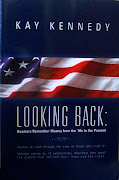
Read the stories of survivors of the Boomer era in the book, Looking Back: Boomers Remember History from the ‘40s to the Present. There you’ll find personal, touching stories written by people who served and fought in Vietnam, to those who lost their homes to Hurricane Katrina. You’ll also learn how the forces of change, such as integration of schools in the South, affected students who were there. And you’ll see why the assassination of a President, and soon after, the assassination of two leading civil rights figures terrified our nation’s citizens.
Twenty-four emotional stories told by people who were there, who witnessed history as it happened, make Looking Back a living testament to the strength and integrity of both the Boomer and their parents’ generation.
Saturday, April 11, 2009


Thursday, January 22, 2009
A Moment in Time
There are moments in time that are just that, a blip on the hands of time. Then there are those moments in time that make history, and sometimes even change the course of history.
On the 20th of January, we all witnessed a moment in time that definitely made history. For the first time, an African American was sworn in as President of the United States. Who would ever have believed this could happen 150 years ago, when most black people in this country were still slaves? A war was fought over slavery so that all African Americans, and in fact, all Americans could become free. In fact, who would have believed it even after the Civil War was over. Even though all Americans were supposedly created equal, blacks still could not vote. Neither could women of any color! We might have all been free, but that still didn’t mean we were free to help choose our destinies.
Even 50 years ago, how many of us ever thought we would see the day when a black man could be elected President? Fifty years ago I was attending the first white high school in the South to become integrated. I can’t imagine that any of the Little Rock nine could fathom such a leap in their lifetimes. Yet here we are, 50 years later, not only electing a black to run our country, but electing a black man over a white man who had been a war hero. That speaks volumes about how far this country has advanced!
This election has made me more proud to be an American than anything that I can recall in my lifetime. Not only have we elected a black man, but we elected someone who had to work hard to get where he is. There was no silver spoon handed to him when he was born, unlike the previous president and many others before him.
Our new president is intelligent, principled, compassionate, and committed to improving the lives of all Americans. He’s a loving husband and father who appears to really know his children and their needs, unlike many of today’s fathers who opt out of a close, personal relationship with their kids.
So does race matter anymore. I know some people to whom it matters a great deal. They proudly announce that they would never vote for a black, no matter how smart, or his qualifications or how honorable his intentions. I have to say that I feel sorry for them. Many of these are the same people (mostly male) who would also never vote for a woman. They keep their minds as closed and prejudiced as they’ve always been, denying that the world has changed. They refuse to acknowledge that both women and blacks can be better educated than they. Their forefathers were the men who refused to allow women to vote before 1920, when women were finally granted a say in who should lead our communities, states and nation. Even as generations come and go, some people brought up on large doses of white male superiority never change.
The right of blacks to vote took a long time to be granted, as complicated voting laws and poll taxes prevented many from exercising their right to vote. Finally in the 1960s, full voting rights were granted to every American citizen after poll taxes were eliminated and voting laws were simplified.
I still can’t picture a color-blind society, where any intelligent, principled, qualified man or woman, no matter their color or religion, can become President. Hopefully, voters will become more thoughtful about why they vote for a particular candidate, and stop letting color or sex get in the way.
Barack Obama has one other endowment besides intelligence, experience, and high principles. He can inspire people, including young voters who have never been known to vote in large numbers in the past. He’s passionate, and that comes across in his speeches. Without the hope that he inspired for a nation weary from a terrible economy and two wars, I have to wonder if he might have prevailed this time?
It’s very unlikely that he will be a perfect president. No one is perfect. And already, the Republicans are fighting him on his solution for the economy. They want the same old thing the previous administration championed—lower taxes for businesses. In case no one noticed, that didn’t work! While I agree that some tax incentives should be offered to small businesses to encourage them to hire, such as offering a $5000 tax credit to any small business (under 100 employees) for each new, full-time employee that it hires. The government’s help with paying for new employees can be a huge incentive for small business owners who might not think they can afford to expand.
Why don’t I believe that the same incentive should be offered to big companies? Because small business has fueled the job growth in this country since the 1980s, and that is where continued growth lies. Large companies tend to be inefficient and less responsive to the market, as proven by automakers that have faced huge losses all while paying their top executives huge (unwarranted, under the circumstances) salaries. And if the same break was offered to large companies, they would likely rehire people they’ve laid off, claiming the tax credit as a way of letting taxpayers help fund their continued follies. If we really want to encourage job growth, tax credits have proven their worth in the past and could be effective again. And again, small businesses offer our greatest hope for the future.
People voted for change, and with the same old Republican guard in place in Congress, citizens need to make their voices heard in Washington to ensure that change takes place. Tell them that you know their way has not worked. Give the new President a chance by supporting his ideas, and make sure your representative in Congress knows that you want change and you want it now. I know that our economy, and indeed, our democracy may not last much longer unless drastic measures are taken, and the sooner the better!
On the 20th of January, we all witnessed a moment in time that definitely made history. For the first time, an African American was sworn in as President of the United States. Who would ever have believed this could happen 150 years ago, when most black people in this country were still slaves? A war was fought over slavery so that all African Americans, and in fact, all Americans could become free. In fact, who would have believed it even after the Civil War was over. Even though all Americans were supposedly created equal, blacks still could not vote. Neither could women of any color! We might have all been free, but that still didn’t mean we were free to help choose our destinies.
Even 50 years ago, how many of us ever thought we would see the day when a black man could be elected President? Fifty years ago I was attending the first white high school in the South to become integrated. I can’t imagine that any of the Little Rock nine could fathom such a leap in their lifetimes. Yet here we are, 50 years later, not only electing a black to run our country, but electing a black man over a white man who had been a war hero. That speaks volumes about how far this country has advanced!
This election has made me more proud to be an American than anything that I can recall in my lifetime. Not only have we elected a black man, but we elected someone who had to work hard to get where he is. There was no silver spoon handed to him when he was born, unlike the previous president and many others before him.
Our new president is intelligent, principled, compassionate, and committed to improving the lives of all Americans. He’s a loving husband and father who appears to really know his children and their needs, unlike many of today’s fathers who opt out of a close, personal relationship with their kids.
So does race matter anymore. I know some people to whom it matters a great deal. They proudly announce that they would never vote for a black, no matter how smart, or his qualifications or how honorable his intentions. I have to say that I feel sorry for them. Many of these are the same people (mostly male) who would also never vote for a woman. They keep their minds as closed and prejudiced as they’ve always been, denying that the world has changed. They refuse to acknowledge that both women and blacks can be better educated than they. Their forefathers were the men who refused to allow women to vote before 1920, when women were finally granted a say in who should lead our communities, states and nation. Even as generations come and go, some people brought up on large doses of white male superiority never change.
The right of blacks to vote took a long time to be granted, as complicated voting laws and poll taxes prevented many from exercising their right to vote. Finally in the 1960s, full voting rights were granted to every American citizen after poll taxes were eliminated and voting laws were simplified.
I still can’t picture a color-blind society, where any intelligent, principled, qualified man or woman, no matter their color or religion, can become President. Hopefully, voters will become more thoughtful about why they vote for a particular candidate, and stop letting color or sex get in the way.
Barack Obama has one other endowment besides intelligence, experience, and high principles. He can inspire people, including young voters who have never been known to vote in large numbers in the past. He’s passionate, and that comes across in his speeches. Without the hope that he inspired for a nation weary from a terrible economy and two wars, I have to wonder if he might have prevailed this time?
It’s very unlikely that he will be a perfect president. No one is perfect. And already, the Republicans are fighting him on his solution for the economy. They want the same old thing the previous administration championed—lower taxes for businesses. In case no one noticed, that didn’t work! While I agree that some tax incentives should be offered to small businesses to encourage them to hire, such as offering a $5000 tax credit to any small business (under 100 employees) for each new, full-time employee that it hires. The government’s help with paying for new employees can be a huge incentive for small business owners who might not think they can afford to expand.
Why don’t I believe that the same incentive should be offered to big companies? Because small business has fueled the job growth in this country since the 1980s, and that is where continued growth lies. Large companies tend to be inefficient and less responsive to the market, as proven by automakers that have faced huge losses all while paying their top executives huge (unwarranted, under the circumstances) salaries. And if the same break was offered to large companies, they would likely rehire people they’ve laid off, claiming the tax credit as a way of letting taxpayers help fund their continued follies. If we really want to encourage job growth, tax credits have proven their worth in the past and could be effective again. And again, small businesses offer our greatest hope for the future.
People voted for change, and with the same old Republican guard in place in Congress, citizens need to make their voices heard in Washington to ensure that change takes place. Tell them that you know their way has not worked. Give the new President a chance by supporting his ideas, and make sure your representative in Congress knows that you want change and you want it now. I know that our economy, and indeed, our democracy may not last much longer unless drastic measures are taken, and the sooner the better!
Wednesday, November 5, 2008
One for the History Books: The Presidential Election on 11-04-2008
Yesterday, the world tuned in to watch history being made in the United States as the first African-American President was elected. Barack Obama, the son of a white American mother and a black man from Kenya became the President-elect against overwhelming odds, but to the joy of so many millions of Americans, both black and white and every other color, all of whom felt he was the right man for the job at the right time regardless of his race.
This was a presidential contest that stirred emotions and excited voters. Even my seven-year-old great-niece was enthusiastic and certain Obama would be elected. At seven, I didn't even know what an election was. The response to this election, as well as the significance of the first African-American being elected, is a tale that will go down in the history books!
Maybe you had to be there in the sixties to realize how monumental this election is. We saw cities burn, and people march and die just so African Americans could win the right to vote. We saw two presidents push an agenda for equal rights, including the right to vote, but the first, President John F. Kennedy, was assassinated before his dreams could become reality. His successor, President Lyndon B. Johnson, would finally be the one to shepherd the bill through Congress. We heard Dr. Martin Luther King, Jr. give speeches urging non-violence as he led freedom marches that would draw attention to the lack of equality or voting rights for our black neighbors, but he wouldn’t live to see those rights happen because he was assassinated. We watched as another Kennedy, Bobby, ran for president with the message of equality plus ending the war in Vietnam, but he, too, was assassinated before his dreams could be realized.
It has been a long, hard struggle for those passionate for change from the beginning, and for those of us who saw our own views about the struggle for basic civil rights evolve. We watched as blacks embraced their right to vote and elected some qualified blacks to office, and as Jesse Jackson, another black civil rights leader, attempted his run for President, to no avail. He wept openly at last night's victory speech, maybe in sorrow that he couldn't have been elected, but more likely because he realized fully the depth of emotion behind and significance of Obama's election.
So now it has finally happened. The right man came along who could stir up the passion of Americans once again, and offer hope for a better world. He was elected President of all of us, even those who perhaps refused to vote for him because he was too black, although he was half-white and raised by white grandparents from Kansas, and of those with idealogical differences. Perhaps his greatest qualification for President, besides being extremely intelligent and seemingly imbued with integrity plus empathy for others, is that he was raised in the multi-cultural society of Hawaii, where every race manages to co-exist in harmony. Still, he would have been one of only a few African Americans living in Hawaii in the sixties, except for those military men and their families who happened to be stationed on the island of Oahu.
We lived in Hawaii in the sixties, and the lessons it offered in racial harmony were not lost on me, a girl who had been raised in a segregated South. Perhaps the lessons of equality also were not lost on Obama as one of a small minority of blacks, but in a society tolerant of “differences.” And yes, there was an undercurrent of racism even in Hawaii in the sixties, but it rarely bubbled to the surface then. Obama was surely aware of it, even there.
And for those of us Americans who have lived through the past eight years of the Bush administration and watched in horror as our country became morally and fiscally bankrupt, Obama’s election is a promise and hope for a new day. I for one realized, and expressed my beliefs even as Bush was running for president, that he would bankrupt our country because of his lack of basic understanding of the economy and the struggles of small business owners and middle class taxpayers. It was discussed among friends who feared the same outcome. I also realized early on that the Bush brand of “Christianity” was not even remotely related to the Christian beliefs I was raised with. As a child of the South I was taught to respect others, to treat everyone equally, to live a life that would make my parents and God proud, and that we should all live by the Ten Commandments. We took seriously the words of God’s Commandments.
The painful sting of the 2000 election for our family was that we, along with millions of other Americans, had our access blocked to the voting booth. Our right to vote was challenged in Court, then the right was restored by a Judge immediately before the election, but we were 1500 miles away and weren’t given time to apply for and receive our absentee ballot, then get it in on time. We also couldn't travel that far on such short notice. It hurt not to be able to exercise our right to vote, so we know how others feel who have their access blocked for any reason.
During the past eight years, we’ve seem civil rights eroded as the Bushies attempted to gather more power in the name of “protecting us from terrorism.” I could write about the Bush fight (or failure) against terrorism, but it has all been rehashed many times on news channels and in news magazines and papers. There’s no point in rehashing it again.
Some of us feared that an honest election would never again take place in the United States, as more evidence was revealed of vote tampering in the 2000 and 2004 elections. I watched in horror as a man explained in a documentary film how he had been contracted to design a program for the Diebold voting machines that would change election results, and claimed that his program was used in Florida in 2000 and in Ohio in 2004 to help Republicans win. Why his information has never received wide exposure is unknown, but I expect that we might hear more about it when the new administration takes office.
Or maybe we won’t. Maybe it’s time for the nation to join together as a team and let bygones be bygones. Still, none of us should become complacent about the possibilities of vote-rigging in future elections, especially with the spread of electronic voting machines. We must all educate ourselves about how elections work and the ways our votes can be stolen or manipulated. Hopefully our voting problems will be solved before the 2012 election. After all, every democratic country in the world does a better job of managing their elections better than we do, and one goal in the next four years should be to ensure that all Americans have free and equal access to vote.
Mainly, this is a time for healing, for renewing faith in our government. This is also a moment to reflect on how far this country has come in the past 40 years, since that historic election in 1968 when the country was being torn apart by racism and the Vietnam war, and a democratic convention was the scene of terrible violence and police brutality.
In reference to the advertising slogan made popular in the sixties, we have indeed come a long way, baby!
This was a presidential contest that stirred emotions and excited voters. Even my seven-year-old great-niece was enthusiastic and certain Obama would be elected. At seven, I didn't even know what an election was. The response to this election, as well as the significance of the first African-American being elected, is a tale that will go down in the history books!
Maybe you had to be there in the sixties to realize how monumental this election is. We saw cities burn, and people march and die just so African Americans could win the right to vote. We saw two presidents push an agenda for equal rights, including the right to vote, but the first, President John F. Kennedy, was assassinated before his dreams could become reality. His successor, President Lyndon B. Johnson, would finally be the one to shepherd the bill through Congress. We heard Dr. Martin Luther King, Jr. give speeches urging non-violence as he led freedom marches that would draw attention to the lack of equality or voting rights for our black neighbors, but he wouldn’t live to see those rights happen because he was assassinated. We watched as another Kennedy, Bobby, ran for president with the message of equality plus ending the war in Vietnam, but he, too, was assassinated before his dreams could be realized.
It has been a long, hard struggle for those passionate for change from the beginning, and for those of us who saw our own views about the struggle for basic civil rights evolve. We watched as blacks embraced their right to vote and elected some qualified blacks to office, and as Jesse Jackson, another black civil rights leader, attempted his run for President, to no avail. He wept openly at last night's victory speech, maybe in sorrow that he couldn't have been elected, but more likely because he realized fully the depth of emotion behind and significance of Obama's election.
So now it has finally happened. The right man came along who could stir up the passion of Americans once again, and offer hope for a better world. He was elected President of all of us, even those who perhaps refused to vote for him because he was too black, although he was half-white and raised by white grandparents from Kansas, and of those with idealogical differences. Perhaps his greatest qualification for President, besides being extremely intelligent and seemingly imbued with integrity plus empathy for others, is that he was raised in the multi-cultural society of Hawaii, where every race manages to co-exist in harmony. Still, he would have been one of only a few African Americans living in Hawaii in the sixties, except for those military men and their families who happened to be stationed on the island of Oahu.
We lived in Hawaii in the sixties, and the lessons it offered in racial harmony were not lost on me, a girl who had been raised in a segregated South. Perhaps the lessons of equality also were not lost on Obama as one of a small minority of blacks, but in a society tolerant of “differences.” And yes, there was an undercurrent of racism even in Hawaii in the sixties, but it rarely bubbled to the surface then. Obama was surely aware of it, even there.
And for those of us Americans who have lived through the past eight years of the Bush administration and watched in horror as our country became morally and fiscally bankrupt, Obama’s election is a promise and hope for a new day. I for one realized, and expressed my beliefs even as Bush was running for president, that he would bankrupt our country because of his lack of basic understanding of the economy and the struggles of small business owners and middle class taxpayers. It was discussed among friends who feared the same outcome. I also realized early on that the Bush brand of “Christianity” was not even remotely related to the Christian beliefs I was raised with. As a child of the South I was taught to respect others, to treat everyone equally, to live a life that would make my parents and God proud, and that we should all live by the Ten Commandments. We took seriously the words of God’s Commandments.
The painful sting of the 2000 election for our family was that we, along with millions of other Americans, had our access blocked to the voting booth. Our right to vote was challenged in Court, then the right was restored by a Judge immediately before the election, but we were 1500 miles away and weren’t given time to apply for and receive our absentee ballot, then get it in on time. We also couldn't travel that far on such short notice. It hurt not to be able to exercise our right to vote, so we know how others feel who have their access blocked for any reason.
During the past eight years, we’ve seem civil rights eroded as the Bushies attempted to gather more power in the name of “protecting us from terrorism.” I could write about the Bush fight (or failure) against terrorism, but it has all been rehashed many times on news channels and in news magazines and papers. There’s no point in rehashing it again.
Some of us feared that an honest election would never again take place in the United States, as more evidence was revealed of vote tampering in the 2000 and 2004 elections. I watched in horror as a man explained in a documentary film how he had been contracted to design a program for the Diebold voting machines that would change election results, and claimed that his program was used in Florida in 2000 and in Ohio in 2004 to help Republicans win. Why his information has never received wide exposure is unknown, but I expect that we might hear more about it when the new administration takes office.
Or maybe we won’t. Maybe it’s time for the nation to join together as a team and let bygones be bygones. Still, none of us should become complacent about the possibilities of vote-rigging in future elections, especially with the spread of electronic voting machines. We must all educate ourselves about how elections work and the ways our votes can be stolen or manipulated. Hopefully our voting problems will be solved before the 2012 election. After all, every democratic country in the world does a better job of managing their elections better than we do, and one goal in the next four years should be to ensure that all Americans have free and equal access to vote.
Mainly, this is a time for healing, for renewing faith in our government. This is also a moment to reflect on how far this country has come in the past 40 years, since that historic election in 1968 when the country was being torn apart by racism and the Vietnam war, and a democratic convention was the scene of terrible violence and police brutality.
In reference to the advertising slogan made popular in the sixties, we have indeed come a long way, baby!
Saturday, October 11, 2008
This Election is About Our Nation's Survival
Are we currently in a recession or a depression? That question remains to be answered as we watch the stock market's mostly downward spiral.
Will the housing market right itself? Another question without an easy answer. For those who bought their home a decade ago and who plan to live in it for another decade, they may not see the huge financial gains made in mid-decade, but they will probably come out ahead. For those who bought in 2003-2006, their home's value may take a long time to reach the level they paid. That is a sad outcome for those who weren't paying attention to the news, but was forseeable for those who were aware of the economic climate and likely outcome.
The stock market fall and the declining housing market were both predictable, and it didn't take a financial whiz to realize it. We have been spending like there was no tomorrow. Now, we will all be paying the price because of lack of loan sources, lowering limits on existing credit cards, and an economy that will affect small businesses as well as large as they face the fact that without a source of money, they must layoff employees and some even close their doors.
The era of greed is over! The upcoming era may be about surviving through some very tough times.
This isn't written to scare you, but everyone that can, must start taking financial responsibility for their financial decisions. And I realize that there are some people who are already hurting too much to be able to help themselves. We must all become sensitive to the families and individuals who are in desperate straits and need our's and our government's help. But we also have to realize that the government, our government, is now in financial straits, and we may all need to step up to the plate and be willing to pay more in taxes. If we don't, we may find the eventual cost is too steep to ever pay. China basically owns us now. We, the greatest, most successful example of a democracy, the most powerful country in the history of the world, could soon be on our knees begging for mercy.
This election is important. The financial policies of the current administration have been disastrous for our nation, and we must NOT elect representatives and a president who will continue those same or similar policies. We need a really intelligent person to run this country, one who has chosen a running mate that offers more than cutesy, folksy or simplistic declarations. After all, that person will be only a heartbeat away from the presidency. And that's why we also need a president who has the best chance of living through his term. This is not ageism on my part. It's just plain old common sense!
While some of you may not believe that things can get worse than they are now - believe me, they can and will if a wise choice is not made in this election. This is not an election where we can afford to elect a candidate based upon emotions. This election is about our nation's very survival.
Will the housing market right itself? Another question without an easy answer. For those who bought their home a decade ago and who plan to live in it for another decade, they may not see the huge financial gains made in mid-decade, but they will probably come out ahead. For those who bought in 2003-2006, their home's value may take a long time to reach the level they paid. That is a sad outcome for those who weren't paying attention to the news, but was forseeable for those who were aware of the economic climate and likely outcome.
The stock market fall and the declining housing market were both predictable, and it didn't take a financial whiz to realize it. We have been spending like there was no tomorrow. Now, we will all be paying the price because of lack of loan sources, lowering limits on existing credit cards, and an economy that will affect small businesses as well as large as they face the fact that without a source of money, they must layoff employees and some even close their doors.
The era of greed is over! The upcoming era may be about surviving through some very tough times.
This isn't written to scare you, but everyone that can, must start taking financial responsibility for their financial decisions. And I realize that there are some people who are already hurting too much to be able to help themselves. We must all become sensitive to the families and individuals who are in desperate straits and need our's and our government's help. But we also have to realize that the government, our government, is now in financial straits, and we may all need to step up to the plate and be willing to pay more in taxes. If we don't, we may find the eventual cost is too steep to ever pay. China basically owns us now. We, the greatest, most successful example of a democracy, the most powerful country in the history of the world, could soon be on our knees begging for mercy.
This election is important. The financial policies of the current administration have been disastrous for our nation, and we must NOT elect representatives and a president who will continue those same or similar policies. We need a really intelligent person to run this country, one who has chosen a running mate that offers more than cutesy, folksy or simplistic declarations. After all, that person will be only a heartbeat away from the presidency. And that's why we also need a president who has the best chance of living through his term. This is not ageism on my part. It's just plain old common sense!
While some of you may not believe that things can get worse than they are now - believe me, they can and will if a wise choice is not made in this election. This is not an election where we can afford to elect a candidate based upon emotions. This election is about our nation's very survival.
Friday, September 12, 2008
How Will The 2008 Election Impact History?
As the election of 2008 approaches, it becomes apparent that this will be a campaign filled with unprecedented fear-mongering and hateful lies. So how do we, as voters, separate the truth from lies?
Well, we can all watch every speech by Obama and McCain that is televised so we’ll know what, exactly, each one says. But watching every speech takes enormous amounts of time and it requires undivided attention so that we don’t simply catch a few words or phrases here and there. And as a matter of fact, so far, we in this household have watched all the speeches. We feel we owe it to ourselves and the future of this country to make sure we vote for the most honest, most competent, most ethical and moral candidate, so that’s why we’ve spent so much time in front of the television this campaign.
We’re constantly receiving emails from people trying to enlighten us on their own political biases. Why, we don’t know, because most of our acquaintances know that we take our responsibilities as citizens seriously, and never believe anything we receive by email until we’ve followed up and checked out the facts. Most times, we find these emails to be false, or to be based on part of a statement made by a candidate that leaves out the most important words in the statement. Maybe our acquaintances are simply checking to see if we’re awake?
Political ads are the worst source of truthful information, so we might as well all hit our mute buttons during these ads because, unless the candidates are talking about the issues (the economy, the war in Iraq, energy prices, etc.), we’re not listening. I want to know what the candidate, if elected president, will do about the issues that involve us, concern us, and affect our future, and I want the truth!
So how can you know what’s true and what’s not without spending hours in front of the TV? There is a nonpartisan Web site that checks email rumors and TV commercials to find out which are true or false. You can find it at www.factcheck.com. And of course, you can also find reports on urban legends at www.snopes.com., which checked out 31 emails about Obama and Clinton and found that only two were completely accurate. Most were flat-out lies.
In an article on factcheck.org, Lori Robertson reports that David Emery, who checks rumors and facts pertaining to the election as author of About.com's Urban Legends page, notes a decidedly anti-Democrat tilt to the bulk of the e-mail chatter. Does this mean that Republicans are meaner, their numbers are larger, or they have more leisure time to spew out hateful, divisive messages? Or does it mean that Democrats are less passionate, or they have less time to send out emails? Emery also says that less than one-tenth of what's circulating out there at any given time turns out to be 100% true. “A substantially larger portion – maybe around half of all the emails or a little more – contain a mixture of facts and falsehoods."
If you are truly concerned about the future of the United States, realize that your vote does count and that this election will make history, no matter which way it turns out. Either we'll have a black president (albeit he's one-half white and was raised by his white family) for the first time ever, or we'll have a woman vice-president, also for the first time.
Also consider the positions of the candidates and how their platforms stack up with or against the Bush administration. Will they continue the policies of the past eight years, or will they represent real change from the past eight years? And consider how their decisions might impact the future of the world. Whatever the newly elected president's policies or decisions, they will also go down in history someday.
We all have the opportunity to influence history with our vote.
Well, we can all watch every speech by Obama and McCain that is televised so we’ll know what, exactly, each one says. But watching every speech takes enormous amounts of time and it requires undivided attention so that we don’t simply catch a few words or phrases here and there. And as a matter of fact, so far, we in this household have watched all the speeches. We feel we owe it to ourselves and the future of this country to make sure we vote for the most honest, most competent, most ethical and moral candidate, so that’s why we’ve spent so much time in front of the television this campaign.
We’re constantly receiving emails from people trying to enlighten us on their own political biases. Why, we don’t know, because most of our acquaintances know that we take our responsibilities as citizens seriously, and never believe anything we receive by email until we’ve followed up and checked out the facts. Most times, we find these emails to be false, or to be based on part of a statement made by a candidate that leaves out the most important words in the statement. Maybe our acquaintances are simply checking to see if we’re awake?
Political ads are the worst source of truthful information, so we might as well all hit our mute buttons during these ads because, unless the candidates are talking about the issues (the economy, the war in Iraq, energy prices, etc.), we’re not listening. I want to know what the candidate, if elected president, will do about the issues that involve us, concern us, and affect our future, and I want the truth!
So how can you know what’s true and what’s not without spending hours in front of the TV? There is a nonpartisan Web site that checks email rumors and TV commercials to find out which are true or false. You can find it at www.factcheck.com. And of course, you can also find reports on urban legends at www.snopes.com., which checked out 31 emails about Obama and Clinton and found that only two were completely accurate. Most were flat-out lies.
In an article on factcheck.org, Lori Robertson reports that David Emery, who checks rumors and facts pertaining to the election as author of About.com's Urban Legends page, notes a decidedly anti-Democrat tilt to the bulk of the e-mail chatter. Does this mean that Republicans are meaner, their numbers are larger, or they have more leisure time to spew out hateful, divisive messages? Or does it mean that Democrats are less passionate, or they have less time to send out emails? Emery also says that less than one-tenth of what's circulating out there at any given time turns out to be 100% true. “A substantially larger portion – maybe around half of all the emails or a little more – contain a mixture of facts and falsehoods."
If you are truly concerned about the future of the United States, realize that your vote does count and that this election will make history, no matter which way it turns out. Either we'll have a black president (albeit he's one-half white and was raised by his white family) for the first time ever, or we'll have a woman vice-president, also for the first time.
Also consider the positions of the candidates and how their platforms stack up with or against the Bush administration. Will they continue the policies of the past eight years, or will they represent real change from the past eight years? And consider how their decisions might impact the future of the world. Whatever the newly elected president's policies or decisions, they will also go down in history someday.
We all have the opportunity to influence history with our vote.
Saturday, August 16, 2008
Is the Cold War that Influenced a Generation, Back?
Growing up in the late ‘40s and ‘50s, the Cold War created a constant sense of danger in our young lives. It was our boogie-man under the bed. Everywhere there were daily reminders—from air raid sirens that blasted at noon each day to the “duck and cover” drills at school. Nuclear annihilation was a constant fear as conflicts between the United States and U.S.S.R. threatened to escalate into a full-scale war. And that would mean one country or the other would use “the Bomb” in order to win.
We children didn’t know if we would live to see adulthood. Heck, we didn’t even know if we would make it until tomorrow! Fear and anxiety among those of us whose families discussed the news of the day was palpable as we said our prayers each night and climbed into bed.
Even if the Cold War wasn’t discussed at home, social studies classes in school reminded us of the threat.
As some of us reached adulthood during those years and later in the ‘60s and ‘70s, the concept of “zero population growth” took hold as we wondered what kind of future we could actually offer our children. We couldn’t promise them a peaceful existence, nor could we even guarantee a future. That was only one result of the Cold War.
The Boomer generation reached their teens as a very conflicted group of young people: those who thought it might be possible to achieve lasting peace by becoming social activists; and those who ignored the dark cloud and lived as though the tomorrows were an endless canvas upon which they could paint their ideal life. Even with contrasting opinions, most young adults realized that the world situation was serious and became more involved in politics than any previous generation.
In the late ‘80s, a huge sigh of relief was breathed as our enemy in the Cold War, the U.S.S.R., started to disintegrate. Would world peace finally become a reality?
We hoped so, but the one constant in the history of the world is change, and unfortunately, what goes around almost always comes around again. Fast forward 20 years, and once again Russia is trying to assert its power by invading a smaller country that declared its independence from Russia only two decades ago.
How did this happen? Did Russia decide the time was ripe to strike while the United States was distracted by two wars and its President was in China enjoying the Olympics? Is it that Russia wants to assure its access to the oil fields in Georgia? After all, while they were rebuilding their power, the United States had started making inroads into their previous territory by providing military help and training to Georgian soldiers. Was the United States there because of the oil?
It does appear that oil is the commodity over which future wars will be fought.
But now we have to ask ourselves, is the Cold War starting up again? It would certainly appear to be a possibility. It seems that there will always be something to fight about as long as there are people on this earth—just as there has always been. We can only pray that our children and grandchildren won’t have to live with the constant, crippling fear that defined our lives.
We children didn’t know if we would live to see adulthood. Heck, we didn’t even know if we would make it until tomorrow! Fear and anxiety among those of us whose families discussed the news of the day was palpable as we said our prayers each night and climbed into bed.
Even if the Cold War wasn’t discussed at home, social studies classes in school reminded us of the threat.
As some of us reached adulthood during those years and later in the ‘60s and ‘70s, the concept of “zero population growth” took hold as we wondered what kind of future we could actually offer our children. We couldn’t promise them a peaceful existence, nor could we even guarantee a future. That was only one result of the Cold War.
The Boomer generation reached their teens as a very conflicted group of young people: those who thought it might be possible to achieve lasting peace by becoming social activists; and those who ignored the dark cloud and lived as though the tomorrows were an endless canvas upon which they could paint their ideal life. Even with contrasting opinions, most young adults realized that the world situation was serious and became more involved in politics than any previous generation.
In the late ‘80s, a huge sigh of relief was breathed as our enemy in the Cold War, the U.S.S.R., started to disintegrate. Would world peace finally become a reality?
We hoped so, but the one constant in the history of the world is change, and unfortunately, what goes around almost always comes around again. Fast forward 20 years, and once again Russia is trying to assert its power by invading a smaller country that declared its independence from Russia only two decades ago.
How did this happen? Did Russia decide the time was ripe to strike while the United States was distracted by two wars and its President was in China enjoying the Olympics? Is it that Russia wants to assure its access to the oil fields in Georgia? After all, while they were rebuilding their power, the United States had started making inroads into their previous territory by providing military help and training to Georgian soldiers. Was the United States there because of the oil?
It does appear that oil is the commodity over which future wars will be fought.
But now we have to ask ourselves, is the Cold War starting up again? It would certainly appear to be a possibility. It seems that there will always be something to fight about as long as there are people on this earth—just as there has always been. We can only pray that our children and grandchildren won’t have to live with the constant, crippling fear that defined our lives.
Wednesday, May 28, 2008
Stories that Define the Boomer Generation
Memories of the past. That’s what I prefer to call recent history. The word history conjures up painful sessions of learning boring dates, names, and useless information that couldn’t possibly have been of importance to me.
Now that I’m an adult I realize just how valuable knowledge of our country’s and the world’s history is. In fact as a civilized society, we cannot proceed with courage and conviction without knowing what has happened in the past. So history is extremely important to our very survival.
Since my school days, there’s been one important change in how I relate to history, and that is because I have now lived through several decades of lots of important stuff. All of a sudden, since this is the Baby Boomer era we’re talking about, HISTORY IS HOT!
In my anthology, Looking Back: Boomers Remember History from the ‘40s to the Present, 20 writers (including myself) share stories of growing up through the greatest, most triumphant and most terrifying of times.
As children, we faced the polio epidemic, which forced our parents to keep us at home to avoid crowds so that we didn’t become victims of a horrifying disease that could cripple us, or worse yet, force us to live in an iron lung for the rest of our lives. Today a Tennessee woman who had been in an iron lung for nearly 60 years and whose story was mentioned in Looking Back, died due to a power outage that shut down the machine that had kept her alive for all these years. Dianne Odell managed to finish high school, attend some college, and write a children’s book—all while encased inside the iron monster. Luckily for most of us, a vaccine was discovered in the early ‘50s that prevented polio so that we, as children, could once again enjoy swimming, movies, and the other joyous activities of summer.
We also lived in fear of the Cold War, Communism, and the BOMB. One writer poignantly recalls living in constant fear and vowing that she would do something about it when she grew up. And she did, which you can read about in the book.
Our world changed as integration and civil and voting rights for black citizens became a pressing issue, finally lifting them out of their second-class status that had existed since the end of the Civil War. I was there when Little Rock Central High became the first Southern high school to be integrated, and when President Eisenhower sent in the 101st Airborne Division to protect the rights of nine black students and ensure security amid swirling threats of violence and mob protests. But mine isn’t the only story of those times. Two other classmates also write about their memories of that frightening time.
Then President John F. Kennedy was assassinated. That November day in 1963 stunned and shocked our nation and destroyed any illusions of security we might have felt. Next came the assassination of Dr. Martin Luther King, civil rights leader, and a few weeks later, the assassination of Robert F. Kennedy, brother of John F. Kennedy and a candidate, himself, in the upcoming presidential election. We all had to wonder what was to become of our beloved country and us?
The major tragedy of those times was the Vietnam War and the tremendous anger and violent protests it generated among the Boomers. Suddenly our streets were filled with young and old protestors and hippies who voiced their opposition to a war that was decimating the numbers of boys and young men. Some protests were peaceful, but many violent, radical groups were also at work during the war. We could never be sure whether our society could withstand the onslaught of opposition by angry young Americans. Many young people marched and others dropped out of society, choosing communal living and drugs to numb their pain. The ‘60s and early ‘70s were both sad and exciting times to live through.
To have been alive to witness history being made during those decades presented an opportunity to those of us who were young to seriously contemplate how we each might make a difference in the world. And even those of us who sat on the sidelines were affected in lasting ways that will remain forever etched in our minds.
Yes, history is hot when you can picture the past vividly through the lenses of those who lived through it. And that’s what Looking Back offers readers: 24 terrific, poignant and very personal stories by those who lived through the Boomer era and truly know what happened then. Read the book and you’ll understand the events and moments that defined the Boomer generation. And maybe you’ll understand why.
Now that I’m an adult I realize just how valuable knowledge of our country’s and the world’s history is. In fact as a civilized society, we cannot proceed with courage and conviction without knowing what has happened in the past. So history is extremely important to our very survival.
Since my school days, there’s been one important change in how I relate to history, and that is because I have now lived through several decades of lots of important stuff. All of a sudden, since this is the Baby Boomer era we’re talking about, HISTORY IS HOT!
In my anthology, Looking Back: Boomers Remember History from the ‘40s to the Present, 20 writers (including myself) share stories of growing up through the greatest, most triumphant and most terrifying of times.
As children, we faced the polio epidemic, which forced our parents to keep us at home to avoid crowds so that we didn’t become victims of a horrifying disease that could cripple us, or worse yet, force us to live in an iron lung for the rest of our lives. Today a Tennessee woman who had been in an iron lung for nearly 60 years and whose story was mentioned in Looking Back, died due to a power outage that shut down the machine that had kept her alive for all these years. Dianne Odell managed to finish high school, attend some college, and write a children’s book—all while encased inside the iron monster. Luckily for most of us, a vaccine was discovered in the early ‘50s that prevented polio so that we, as children, could once again enjoy swimming, movies, and the other joyous activities of summer.
We also lived in fear of the Cold War, Communism, and the BOMB. One writer poignantly recalls living in constant fear and vowing that she would do something about it when she grew up. And she did, which you can read about in the book.
Our world changed as integration and civil and voting rights for black citizens became a pressing issue, finally lifting them out of their second-class status that had existed since the end of the Civil War. I was there when Little Rock Central High became the first Southern high school to be integrated, and when President Eisenhower sent in the 101st Airborne Division to protect the rights of nine black students and ensure security amid swirling threats of violence and mob protests. But mine isn’t the only story of those times. Two other classmates also write about their memories of that frightening time.
Then President John F. Kennedy was assassinated. That November day in 1963 stunned and shocked our nation and destroyed any illusions of security we might have felt. Next came the assassination of Dr. Martin Luther King, civil rights leader, and a few weeks later, the assassination of Robert F. Kennedy, brother of John F. Kennedy and a candidate, himself, in the upcoming presidential election. We all had to wonder what was to become of our beloved country and us?
The major tragedy of those times was the Vietnam War and the tremendous anger and violent protests it generated among the Boomers. Suddenly our streets were filled with young and old protestors and hippies who voiced their opposition to a war that was decimating the numbers of boys and young men. Some protests were peaceful, but many violent, radical groups were also at work during the war. We could never be sure whether our society could withstand the onslaught of opposition by angry young Americans. Many young people marched and others dropped out of society, choosing communal living and drugs to numb their pain. The ‘60s and early ‘70s were both sad and exciting times to live through.
To have been alive to witness history being made during those decades presented an opportunity to those of us who were young to seriously contemplate how we each might make a difference in the world. And even those of us who sat on the sidelines were affected in lasting ways that will remain forever etched in our minds.
Yes, history is hot when you can picture the past vividly through the lenses of those who lived through it. And that’s what Looking Back offers readers: 24 terrific, poignant and very personal stories by those who lived through the Boomer era and truly know what happened then. Read the book and you’ll understand the events and moments that defined the Boomer generation. And maybe you’ll understand why.
Subscribe to:
Posts (Atom)